Funded by: Korea SHE Foundation
Organized by: Centre for Ecological studies Nepal
Supporting organization: Division Forest Office, Kathmandu
Global Seed Grant 2021- May- Oct 2021
About the project :
As the project coordinator, we have successfully implemented the project o “ Capacity building training on organic waste management for methane emission reduction: 100 participants weaving 300 in the Nagarjun communities of Kathmandu district, Nepal.” This project was carried out in Nagarjun communities of Kathmandu district, Nepal, with funding from the Korea SHE Foundation under the Global Seed Grant 2021. Our objective was to encourage organic waste management to reduce methane emissions while building local capacity for waste management practices.

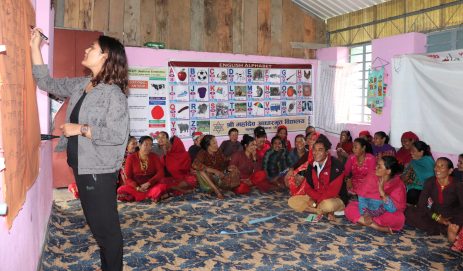
Our project focused on addressing the issue of organic waste pollution through a series of initiatives aimed at creating sustainable waste management practices within local communities. We organized extensive capacity-building training programs for marginalized groups, local residents, and community stakeholders, including youth groups, school students, community forest user groups (CFUGs), and mother groups. The training sessions equipped them with scientific knowledge on organic waste segregation and conversion techniques, such as composting for urban farming and energy generation.
Through our engagement, we managed to directly train 180 participants, including municipal staff, forest officials, youth volunteers, and women from marginalized communities. Each participant was trained with the goal of cascading the knowledge to their families, weaving a broader network of around 500 cleanliness ambassadors committed to sustainable waste management. The training was practical and based on the reuse and recycling of organic waste, with special emphasis on composting techniques that utilized locally available materials.
In commemoration of World Cleanup Day 2021, we also conducted an online video competition under the theme “Organic Manure Preparation: A Way to Convert Trash into Treasure.” This initiative helped raise awareness about the importance of organic waste management both nationally and internationally, reaching participants from Nepal and beyond.

The project’s impact is visible in the communities, where eco-friendly and biodegradable dustbins were distributed to promote proper waste segregation at the household level. These bins have helped reduce the amount of organic waste going to landfill sites, thus mitigating methane emissions and promoting the use of organic manure for urban farming.
Despite the challenges posed by the COVID-19 pandemic, including lockdowns and restrictions on community gatherings, our team persevered. We adapted by conducting virtual outreach, incorporating school-based sensitization programs, and maintaining consistent community engagement through remote methods. Our efforts culminated in measurable success, with local communities now practicing organic waste management and contributing to the reduction of carbon emissions through sustainable practices.
The project has not only sensitized local stakeholders to the importance of organic waste management but has also laid a strong foundation for long-term sustainability in waste reduction efforts. This initiative has empowered communities, fostered environmental stewardship, and contributed to the broader goal of mitigating climate change impacts in Nepal.
Introduction video: