This project was part of the annual program of the Division Forest Office, Sindhuli, and was implemented in the Chure region. As researchers, we were a team of three, working in close collaboration with the Division Forest Office and the Sub-Division Forest Office. The Community Forest User Group (CFUG) played a vital role in supporting our efforts, providing valuable local insights and assistance throughout the process. The program aimed to establish permanent increment plots for continuous forest growth measurement, which would contribute to long-term sustainable forest management in the area. Together with the forest authorities and the local community, we ensured that the project was successfully executed, with all stakeholders actively participating in achieving the program’s objectives.
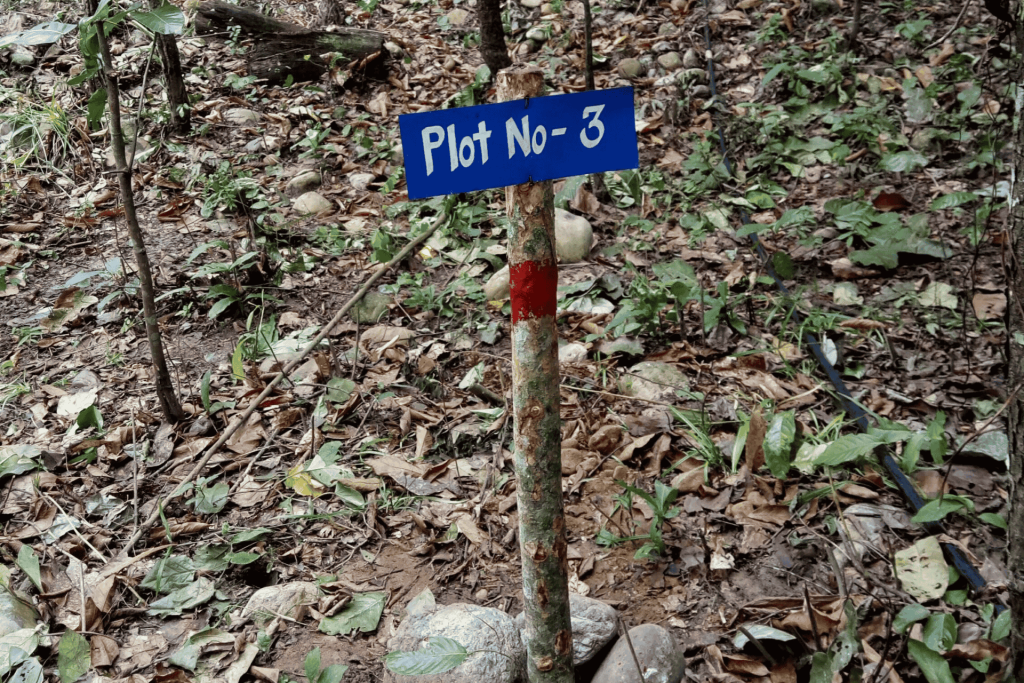
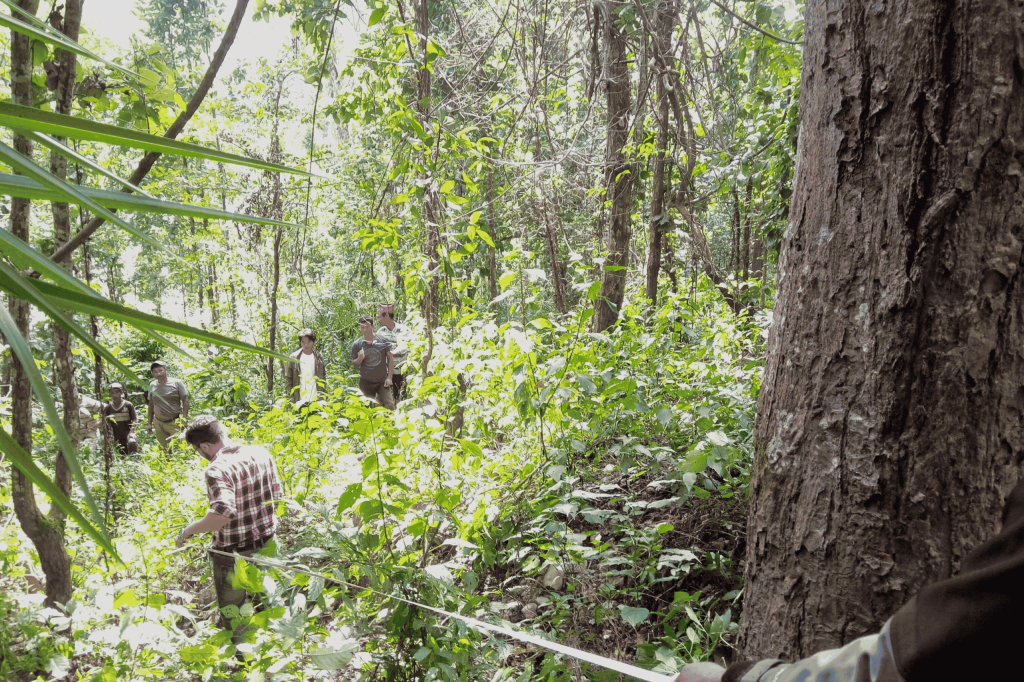

The process began with site preparation, where the designated plot area was cleared of shrubs and tall grasses to facilitate the survey. The fixed plot, measuring 0.5 hectares, was then marked with iron rods to ensure it could easily be relocated for future measurements. Plot selection followed a stratified sub-sampling method, based on key forest characteristics like tree density and crown volume. Within the fixed plot, three rectangular subplots were established, each measuring 20 meters by 25 meters, ensuring accurate representation of the forest type.
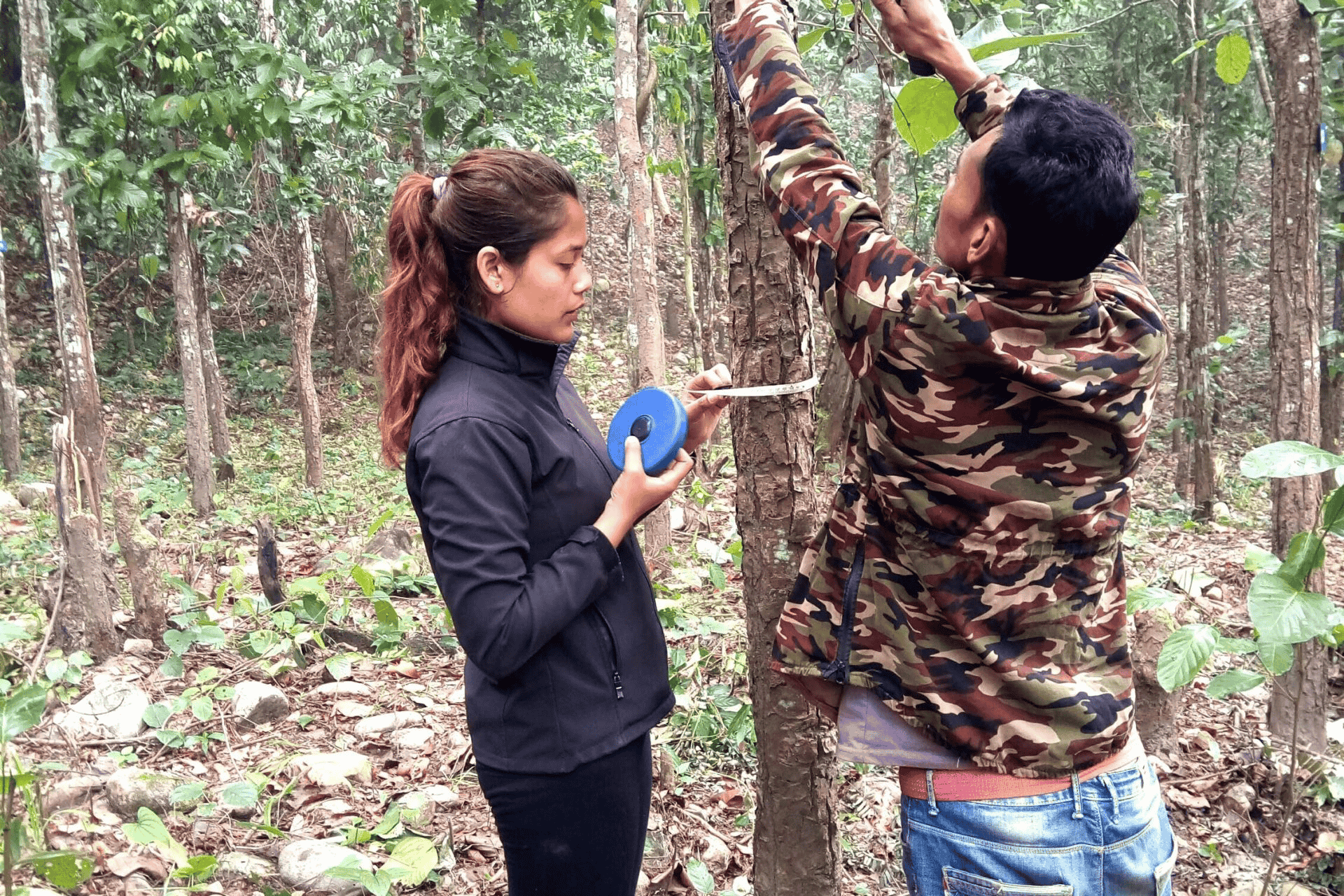
We then proceeded to measure the diameter at breast height (DBH) of all trees greater than 5 cm in diameter, excluding dead trees. Using a diameter tape, we measured DBH at 1.3 meters from the ground, while tree heights were recorded using Abney’s level. These measurements allowed us to calculate the volume of the trees using the standard forestry formula outlined in the “Community Forestry Guidelines 2072.” This step provided the baseline data for the current increment, which would later be compared in subsequent years to determine the annual growth of the forest.
In addition to tree measurements, we collected environmental data, such as the elevation of the site using GPS equipment. Soil properties, including pH levels, were measured using pH meters, while soil gauges were used to assess other physical characteristics of the soil. This environmental data was crucial for understanding the growth conditions in the Chure region and for correlating tree growth with factors such as soil quality and elevation.
Finally, we marked the plot boundaries with GPS coordinates to map the increment plot accurately. This mapping ensured that future surveys could easily locate the plot and measure the same trees to track growth over time. With the combined efforts of the Division Forest Office, the Sub-Division Forest Office, and the Community Forest User Group, we successfully established a reliable system for continuous forest growth monitoring in Sindhuli’s Chure region.
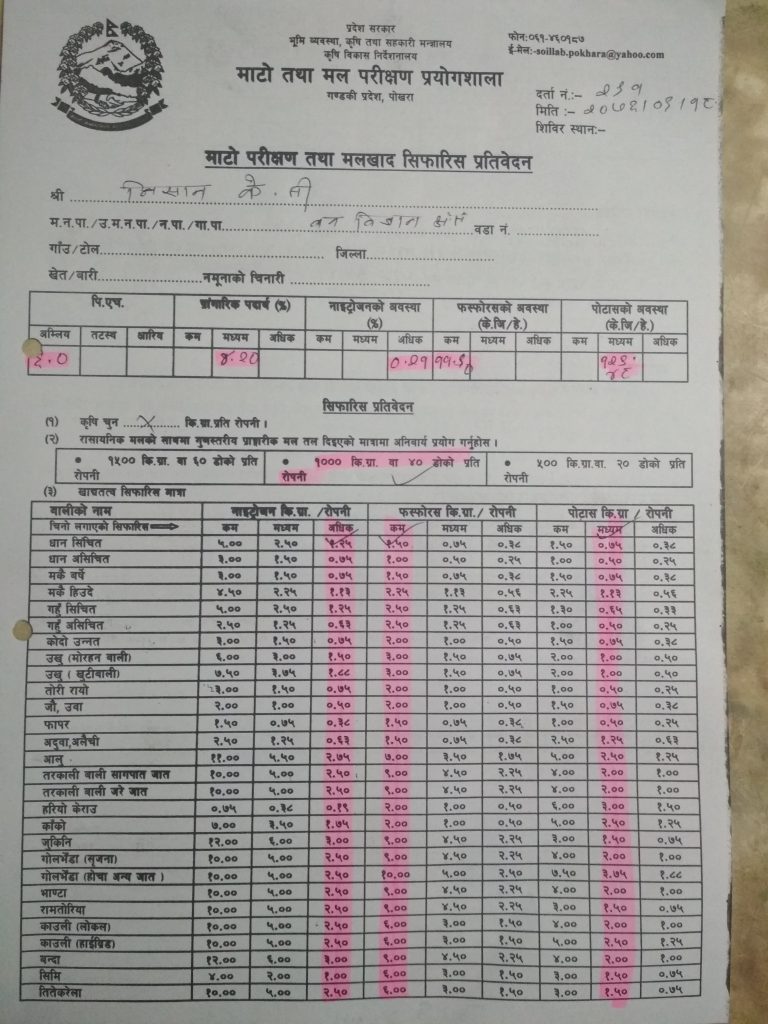
From the soil test
We have measured the soil quality in the Chure region as part of our efforts to assess and improve forest health. Through this analysis, we found that the soil is slightly acidic, with a pH of 5.20. This level of acidity can potentially limit the availability of certain nutrients essential for tree growth. Based on this, we have identified the need to apply lime to neutralize the acidity and enhance the soil’s ability to support vegetation. We also measured the organic matter content, which was found to be 2.0%, indicating that the soil can retain nutrients and support microbial life, both of which are crucial for the healthy functioning of forest ecosystems.
In terms of nutrient availability, we found the nitrogen content to be 0.099%, which suggests that while there is some nitrogen present, it might not be sufficient for optimal plant growth. Therefore, we have determined that adding nitrogen-rich fertilizers or organic matter could enhance tree development, particularly for young saplings. Phosphorus levels were measured at 925 kg/ha, which will be beneficial for the root development of trees, particularly in reforestation projects. Potassium, which we measured at 98.8 kg/ha, plays a key role in water regulation and disease resistance, helping trees withstand environmental stressors such as drought or pests.
By understanding these soil characteristics, we have developed a strategy to support forest health. We plan to follow the recommendations provided, such as incorporating compost and applying fertilizers like nitrogen, phosphorus, and potassium in the appropriate amounts. These actions will improve soil fertility, promote healthy forest growth, and ensure the sustainable management of the forest resources in the Chure region.